"Is it a heart attack?" This is often the first thought when a panic attack strikes. Your heart races, your palms sweat, and you feel like you can't breathe. In emergency rooms across Lahore and Karachi, thousands of patients present with these physical symptoms every month, only to be told, "It's just stress."
But anxiety is not "just" anything. It is a debilitating condition that affects millions of Pakistanis. Recent studies estimate that nearly 34% of the population suffers from anxiety and depression, with numbers rising sharply to over 57% during recent crisis periods.
Key Statistic
Women in Pakistan are disproportionately affected, being twice as likely as men to experience severe anxiety due to societal pressures and household responsibilities.
The Cultural Barrier: "Log Kya Kahenge"
In our society, mental health is often misunderstood. We have all heard the labels—"Kamzor eman" (weak faith), "Nafsiyati" (mental), or simply "Drama seeking". This stigma creates a massive barrier to healing.
Many of my clients tell me they hid their symptoms for years because they were afraid of bringing shame to their families. They suffered in silence, praying for relief, not realizing that anxiety is a treatable health condition, just like diabetes or high blood pressure.
Recognizing the Symptoms
Anxiety doesn't always look like fear. In Pakistan, we often "somatize" our stress, meaning we feel it in our bodies. Common signs include:
- Gastrointestinal Issues: Constant upset stomach, gas, or "gola" in the throat.
- Physical Pain: Unexplained back pain, headaches, or muscle tension.
- Intrusive Thoughts: Constant worry about the safety of loved ones or financial ruin.
- Avoidance: Skipping family weddings or gatherings to avoid social judgment (Social Anxiety).
The Different Types of Anxiety
"Anxiety" is an umbrella term, and knowing which form you are dealing with is the first step toward the right kind of help:
- Generalised Anxiety Disorder (GAD): A constant, low-grade worry that drifts from one topic to the next — your children, your job, your health, the bills. It feels impossible to switch off.
- Social Anxiety: An intense fear of being judged. In a culture of log kya kahenge, this often shows up as dread before weddings, gatherings, or speaking up at work.
- Panic Disorder: Sudden, overwhelming waves of fear with physical symptoms so strong they are frequently mistaken for a heart attack.
- Health Anxiety: A preoccupation with serious illness, often driving repeated doctor visits and tests that keep coming back normal.
- Phobias: A specific, powerful fear — of flying, heights, or crowds — strong enough to disrupt everyday life.
What's Fuelling Anxiety in Pakistan?
Anxiety rarely appears out of nowhere. For most of my clients, it is the slow build-up of very real pressures:
- Economic uncertainty. Rising inflation and job insecurity keep many people in a permanent state of "what if". See Coping with Financial Anxiety in Pakistan.
- Family & marriage pressure. Joint-family dynamics, in-law conflict, and the rishta process can quietly erode your peace and self-worth. See Rishta Stress & Self-Worth and Surviving the Joint Family.
- Academic & career stress. The weight of exams, results, and "settling down on time" falls heavily on students and young professionals. See Managing Exam Stress.
- Comparison & social media. Scrolling through everyone else's curated "perfect" life feeds a constant sense of falling behind.
- Uncertainty & safety. Living with unpredictability keeps the nervous system on permanent high alert.
Everyday Stress or an Anxiety Disorder?
Stress is a normal, healthy response to a real demand — it fades once the deadline passes or the problem is solved. Anxiety becomes a disorder when the worry outlives the situation, feels out of proportion, and starts to shrink your world.
Before reaching for professional help, a few things are worth trying yourself: protecting your sleep, cutting back on caffeine and late-night scrolling, daily movement or a short walk, and simple breathing exercises. For mild, short-lived stress, these often help.
But it is time to speak to a professional if your anxiety has lasted more than a few weeks, interferes with your work, sleep, or relationships, causes ongoing physical symptoms, or pushes you to avoid things you used to manage. Reaching out early is not weakness — it leads to a faster, fuller recovery.
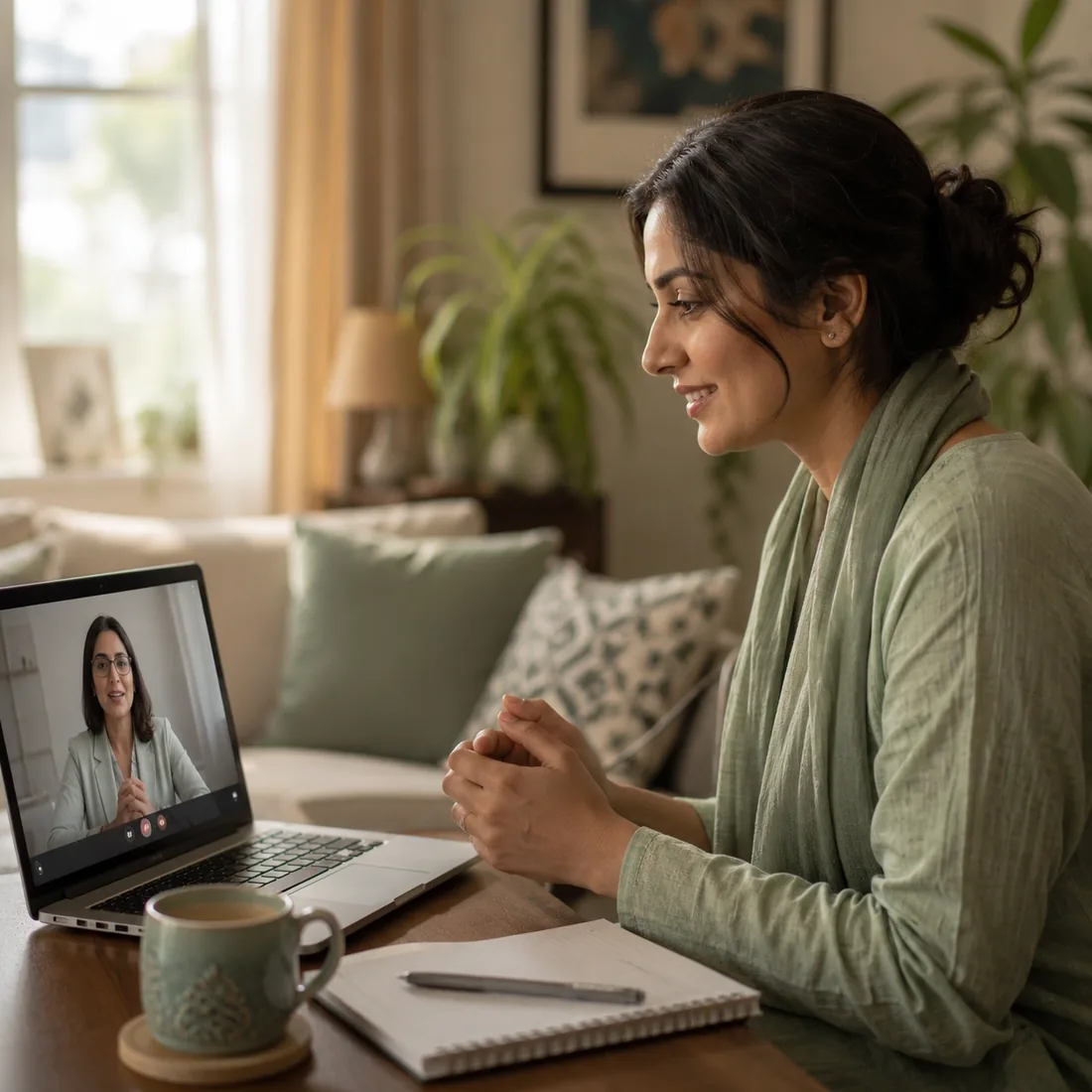
Why Online Therapy Works Better for Us
For many Pakistanis, especially women and busy professionals, traditional in-person therapy has hurdles:
1. Complete Privacy
There is no waiting room where you might run into a neighbor or relative. You speak from your safe space, and your identity remains confidential.
2. Accessibility
Whether you are in a remote area or stuck in Islamabad traffic, help is just a click away. You don't need to commute for an hour to see a good psychologist.
3. Comfort of Language
Therapy works best when you can express yourself in your mother tongue. We conduct sessions in Urdu, English, and Punjabi, so you never have to struggle to find the right word for your feelings.
How We Treat Anxiety
At Healing with Attia, we use evidence-based approaches like Cognitive Behavioral Therapy (CBT). We work together to:
- Identify the "negative automatic thoughts" fueling your fear.
- Learn breathing and grounding techniques to stop panic attacks in their tracks.
- Gradually face your fears in a safe, supportive environment.
You Don't Have to Carry This Alone
Anxiety is treatable. You can reclaim your life, your peace, and your joy.
Book Your Consultation in Urdu/English