Serving all of Pakistan & the diaspora — Online
OCD Treatment in Pakistan —
ERP Therapy Online, in Urdu & English
The washing that never feels finished. The checking you can't stop. The intrusive thoughts you would never say out loud — including waswasa. OCD has a specific, research-proven treatment, and it works online.
OCD in Pakistan: What the Research Shows
OCD is common, badly under-recognized, and highly treatable. Every figure links to the published research behind it.
of people worldwide experience OCD in their lifetime — it is far more common than most Pakistanis realize.
of adults in a Lahore university study reported significant obsessive-compulsive symptoms.
of medical students surveyed in Karachi were unaware of OCD — even future doctors often don't recognize it.
randomized studies (1,113 patients): ERP therapy combined with medication significantly outperforms medication alone.
psychiatrists per 100,000 people in Pakistan — one of the lowest ratios in the world.
of Pakistanis living with a mental illness receive no treatment at all.
What OCD Actually Looks Like
OCD is not a personality quirk about tidiness. It is a cycle of unwanted thoughts and exhausting rituals.
Common Forms
- Contamination fears — washing hands or clothes until skin cracks
- Checking — locks, stoves, iron, gas, over and over
- Symmetry and arranging — things must feel "just right"
- Pathological doubt — "did I really…?" on a loop
- Intrusive violent or taboo thoughts you'd never act on
- Endless reassurance-seeking from family
How OCD Hides in Pakistan
In Pakistan, OCD often wears a religious or cultural disguise — which delays treatment for years:
- Waswasa — repeating wudu or ghusl, doubting whether prayer "counted"
- Blasphemous intrusive thoughts that cause unbearable shame
- Being told it is weak iman — when it is actually a treatable disorder
- Excessive purity checking of clothes, food, or surfaces
- Asking scholars or family the same question again and again
If any of this is familiar: the thoughts are not you, and the rituals are not devotion or diligence — they are OCD. And OCD responds to treatment.
Can OCD Be Cured?
Here is the honest answer. The goal of OCD treatment is not to guarantee you never have an unwanted thought again — nobody's mind works that way. The goal is to make intrusive thoughts powerless: they appear, and instead of triggering an hour of washing or checking, they pass. People who complete treatment routinely describe getting their time, their prayers, and their peace of mind back.
The treatment with the strongest evidence is ERP — exposure and response prevention — a specialized form of CBT. A meta-analysis of 21 randomized studies covering 1,113 patients found ERP combined with medication significantly outperforms medication alone, and ERP consistently outperforms both placebo and drug-only treatment in reducing OCD symptoms.
What does not work: suppressing the thoughts, avoiding triggers forever, or being told to "just stop thinking about it." OCD feeds on avoidance and reassurance. ERP starves it — systematically, gradually, and at a pace you agree to.
How ERP Treatment Works
Structured, gradual, and always with your consent — nothing is forced on you.
1. Mapping Your OCD Cycle
We identify your specific obsessions, compulsions, and avoidance patterns — and you learn why the OCD cycle keeps itself alive. Understanding it is half the battle.
2. Building a Hierarchy
Together we rank your triggers from mildest to hardest. Treatment starts small — you are never thrown into your worst fear on day one.
3. Exposure, Without the Ritual
Step by step, you face triggers while resisting the compulsion — and discover the anxiety falls on its own. Because sessions are online, exposures happen in your real home environment, where the OCD actually lives.
4. Relapse Prevention & Honest Referrals
You learn to handle future flare-ups yourself. And if your OCD is severe enough that medication should be considered alongside ERP, I will tell you honestly and help you find a psychiatrist. Psychiatrist vs psychologist →
Waswasa: Religious OCD Deserves Real Treatment
Waswasa is one of the most common — and most silently suffered — forms of OCD in Pakistan. Repeating wudu four, five, six times because it never feels valid. Restarting prayers over a doubt. Intrusive blasphemous thoughts that arrive precisely because they horrify you, followed by crushing guilt and the fear that something is deeply wrong with your faith.
Nothing is wrong with your faith. Research on OCD across Muslim-majority countries shows religious obsessions are simply the shape OCD takes in religious societies — the disorder attacks whatever you value most. A devout person gets religious obsessions for the same reason a loving mother gets intrusive thoughts about her baby being harmed: OCD targets what matters.
Treatment is fully faith-respectful. ERP targets the doubt-and-repeat cycle, never your beliefs. Many clients find that treating the OCD gives them back the ability to worship with presence instead of dread — which is the opposite of losing faith.
OCD Treatment, Wherever You Are in Pakistan
Sessions are fully online, so it makes no difference whether you are in a major city or a small town. City-specific pages:
Or start with online therapy in Pakistan — all services, one page.
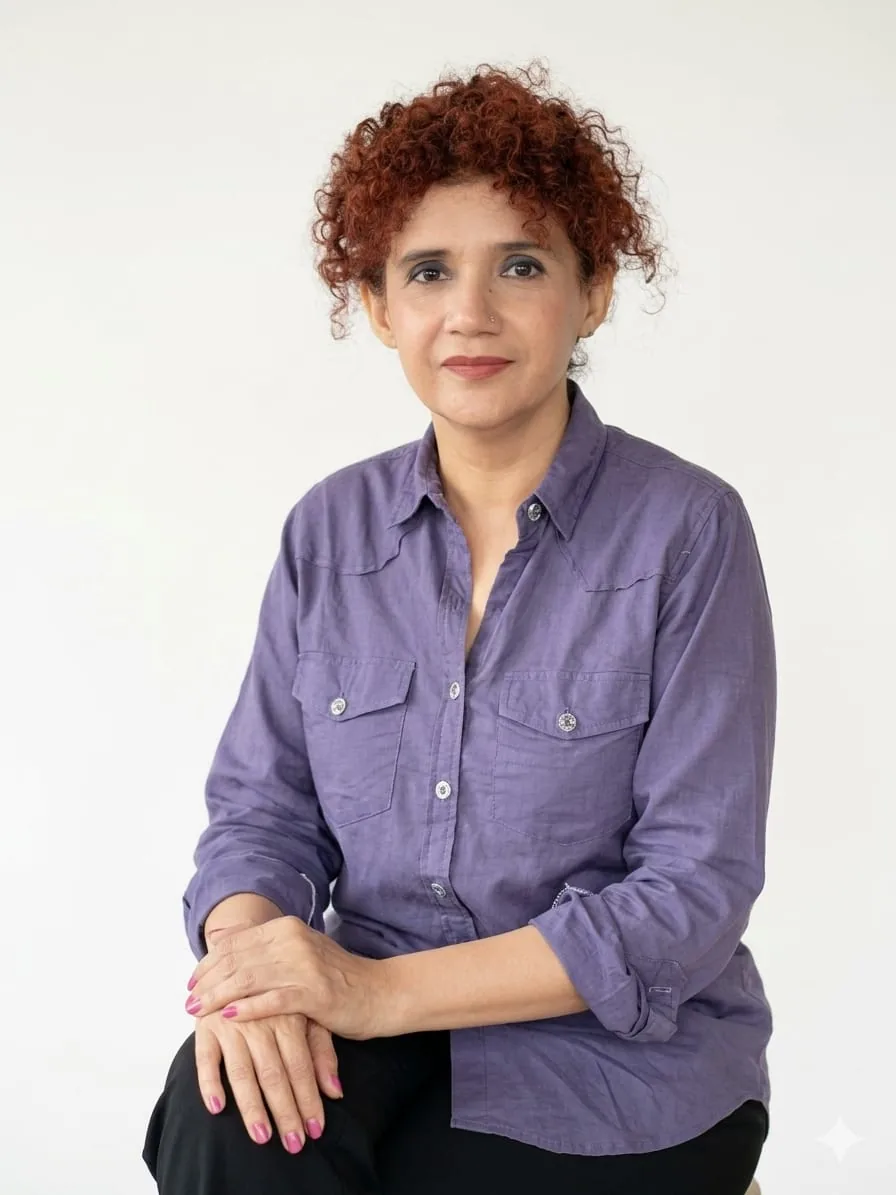
Your Therapist: Attia Altaf
Integrative Psychotherapist (CPCAB-UK)
I am a UK-certified Integrative Psychotherapist with over 8 years of experience, and OCD is one of the areas closest to my practice. I know how it presents in Pakistan: the wudu repeated until hands ache, the checking that makes you late for everything, the intrusive thoughts you have never told a single person.
ERP with me is structured and collaborative. You will never be mocked for a fear, forced into an exposure you did not agree to, or told your faith is the problem.
- UK-Certified, Level 3 & 4 — Integrative Psychotherapy (CPCAB)
- PhD in Media & Communication Sciences
- CBT, DBT, Trauma-Informed, Hara Therapy
- Sessions in Urdu, English & Punjabi
Session Fees
Transparent pricing — no assessment fees, no hidden charges
PKR 5,000 / 50-minute session
One flat fee for every type of session — OCD treatment, anxiety, depression, trauma, marriage counseling and more. Online, in Urdu & English, with no waiting list.
Book a Session on WhatsAppFrequently Asked Questions
How is OCD treated?
The gold-standard treatment is ERP (exposure and response prevention), a specialized form of CBT. You gradually face the situations that trigger obsessions while learning not to perform the compulsion. For moderate to severe OCD, ERP is sometimes combined with medication prescribed by a psychiatrist.
Can OCD be cured?
OCD is highly treatable. Many people who complete ERP reach a point where OCD no longer controls their daily life — intrusive thoughts may still appear occasionally, but they lose their grip. The goal is to make unwanted thoughts powerless, not to promise a mind with no unwanted thoughts (nobody has that).
How much does OCD treatment cost in Pakistan?
Sessions are PKR 5,000 for a 50-minute online session — the same flat rate as every other session type. No assessment fees or hidden charges.
Do you treat religious OCD (waswasa)?
Yes — including repeated wudu or ghusl, doubts about prayer validity, and distressing blasphemous intrusive thoughts. Treatment is faith-respectful: ERP targets the OCD cycle, never your beliefs.
Is online ERP therapy effective?
Yes. ERP is particularly well suited to online delivery, because exposures happen in your real environment — your own kitchen, bathroom, or prayer space — rather than an artificial clinic setting. Research shows internet-delivered CBT achieves outcomes comparable to face-to-face treatment.
Will I need medication?
Not necessarily — many people improve with ERP alone. For severe OCD, research supports combining ERP with medication. If a psychiatric evaluation would genuinely help you, Attia will say so and help you find one.
OCD Is Treatable. The Rituals Can End.
No referral needed. No waiting list. No one has to know. One WhatsApp message is the entire first step.
Book via WhatsApp