Marriage Counseling — Pakistan
Marriage Counseling in Pakistan —
Online, Private & in Urdu
Professional online marriage counseling by a UK-certified Integrative Psychotherapist. Individual sessions via Zoom in Urdu and English — available across Pakistan and worldwide.
You don't need your spouse to agree to therapy to start improving your marriage. You can begin alone.
The Numbers No One Talks About
Marriages in Pakistan are under more pressure than ever — and help works better, and earlier, than most people think.
What Is Marriage Counseling?
Marriage counseling — also known as relationship counseling — is professional therapy where a trained therapist works with you to address the patterns, communication gaps, and unresolved issues that are putting strain on your marriage.
In Pakistan, marriage is rarely just about two people. It involves families, expectations, financial pressures, and deeply rooted cultural roles. A professional marriage counselor understands this context — and works within it, not against it. The goal is not to change your culture or your values. It is to help you communicate, reconnect, and build a marriage that actually works.
At Healing with Attia, marriage counseling is conducted online via Zoom — in Urdu and English — making it accessible from anywhere in Pakistan and abroad. Sessions are individual: you attend on your own, work through what is happening in your marriage with a trained therapist, and apply what you learn at home. If it would genuinely help, your spouse may occasionally join a session — but the work never depends on them agreeing to therapy.
Signs Your Marriage May Benefit from Counseling
Many people wait too long before seeking help — often until the relationship is in crisis. Research from The Gottman Institute found that couples wait an average of six years after problems begin before reaching for support — six years in which negative patterns harden into habits. The same research program identified four communication patterns so corrosive that their presence predicted divorce with over 90% accuracy: criticism, contempt, defensiveness, and stonewalling. If you recognise any of the patterns below, it is time — not because your marriage is doomed, but because this is the window where change is easiest:
Criticism Has Replaced Complaints
"You never..." and "You always..." — attacking your spouse's character instead of raising a specific issue. The first of Gottman's four warning patterns.
Contempt: Eye-Rolling & Taunts
Sarcasm, mockery, speaking down to each other. In Gottman's research, contempt was the single strongest predictor of divorce — and the most urgent to address.
Defensiveness on Both Sides
Every complaint is met with a counter-complaint. Nobody feels heard, and every conversation becomes a case being argued rather than a problem being solved.
Stonewalling & Silence
One of you shuts down, walks out, or goes silent for days. Withdrawal feels safer than conflict — but it slowly turns a marriage into coexistence between strangers.
Joint Family Tension
In-law interference, lack of boundaries, and feeling caught between your spouse and your parents — one of the most common causes of marital stress in Pakistan.
Thinking About Separation
If divorce or khula is being considered, counseling is not a last resort — it is the most important step before making any irreversible decision.
You do not need to be in crisis to benefit from marriage counseling. Many people use it proactively — to strengthen communication before problems become serious, or as pre-marital counseling before the nikah. And crucially: these patterns can be interrupted by one person learning to respond differently. You do not need your spouse's permission to stop a cycle you are both trapped in.
Not Sure If You Need Counseling?
It is completely normal to feel uncertain before reaching out. Message Attia on WhatsApp, describe what you are going through, and she will let you know honestly whether counseling is the right step — with no pressure to book.
Send a MessageYour Spouse Won't Come to Counseling? Start Anyway
This is the single most common reason people in Pakistan never get help: one spouse is ready, the other refuses. "Counseling? Hum pagal nahi hain." So nothing happens — for years.
Here is what that waiting looks like at a national scale: family courts across Pakistan registered over 100,000 divorce and khula cases in 2025, and khula filings by women now outnumber talaq filings by men by roughly 25%. Behind most of those filings is not a marriage where counseling failed — it is a marriage where counseling was never tried, usually because one partner wouldn't go.
That is why counseling at Healing with Attia is built as individual marriage counseling. A marriage is a system: your patterns and your spouse's patterns feed each other. When one person learns to raise issues without criticism, hold boundaries with in-laws calmly, stop rewarding stonewalling with escalation, and respond instead of react — the entire dynamic shifts. Your spouse ends up in a different marriage, whether or not they ever attend a session.
Working alone is not the consolation prize. For many situations — where one partner is dismissive of therapy, where emotions run too hot for joint conversations, or where you first need clarity about what you want — starting individually is the clinically sensible first step. And if your spouse becomes open to it later, they can occasionally join a session.
The Pakistan-Specific Challenge: Why Marriage Here Is Different
Standard Western approaches to marriage counseling were not designed with Pakistani marriages in mind. The joint family system, arranged marriages, financial dependence, religious expectations, and the deep stigma around seeking help — these are realities that shape every session.
The Joint Family Pressure
A husband often finds himself as the "sandwich man" — caught between his mother's expectations and his wife's need for autonomy. A wife may feel her decisions are constantly overridden. What looks like a problem between husband and wife is often a structural problem in how boundaries are (or are not) negotiated with the extended family.
Attia works with each person to find a path forward that respects family while protecting the core marriage. Not every situation requires a dramatic change — but every marriage needs clarity and a united front.
Communication Patterns in Pakistani Marriages
In many Pakistani households, emotional expression is not normalized. Men are expected to be stoic; women are expected to be accommodating. What results is a marriage where both people are silently struggling — neither knowing how to start the conversation that could actually help.
One of the most common things people say after starting counseling: "We have been feeling this way for years but never knew how to say it." That is exactly what a trained therapist helps you do.
The Stigma Problem
In Pakistan, seeking marriage counseling still carries stigma — the assumption that something must be "seriously wrong" or that you are about to get divorced. The scale of the problem is stark: an estimated 90% of Pakistanis who need mental-health support never receive it, in a country with roughly 0.19 psychiatrists per 100,000 people. Stigma and access failures — not lack of need — keep people struggling alone.
Online marriage counseling removes the social risk entirely. There is no clinic, no waiting room, no risk of someone recognising your car. Just a private Zoom session from your own home — and because it is individual, no one even needs to know you are working on your marriage.
How Marriage Counseling Works — Session by Session
A structured, individual marriage counseling process typically moves through the following stages:
- Assessment Session The first session is about understanding your relationship — how it began, what has changed, what you need, and what you have already tried. Attia listens without judgement before making any assessment.
- Identifying the Real Patterns Surface arguments are rarely about what they seem. Sessions uncover the underlying cycle you and your spouse are caught in: the pursuer-withdrawer dynamic, unspoken expectations, and unmet emotional needs that fuel recurring conflict — and your role within it, which is the part you can change.
- Building New Communication Tools You learn specific, practical techniques for expressing needs without blame, listening without shutting down, and navigating disagreement without it escalating into a fight — then you take them home and use them.
- Repair & Reconnection Rebuilding trust and emotional intimacy from your side of the marriage: changing how you respond, initiating repair after conflict, and creating rituals of connection. If it would help at this stage, your spouse may occasionally join a session.
- Consolidation The final sessions focus on making sure the gains hold after therapy ends — building self-sufficiency so you do not become therapy-dependent. Most clients see meaningful change within 8–12 sessions.
Attia's Approach: Integrative Marriage Counseling
Attia Altaf is a trained Integrative Psychotherapist — which means she draws on multiple evidence-based models to find what works for your specific situation, rather than following a rigid formula. For marriage counseling, this typically includes:
- Attachment-informed work — understanding the emotional needs and fears underneath the arguments, drawing on the attachment research base that modern relationship therapy is built on
- Cognitive Behavioural Therapy (CBT) — an extensively researched, evidence-based method for challenging the automatic thoughts and assumptions that fuel conflict
- Systems Theory — understanding you and your spouse within your family system and cultural context; the principle that when one part of a system changes, the whole system must adjust is exactly why individual work can shift a marriage
- Hara Therapy — body-based awareness techniques that help regulate emotional reactivity during difficult conversations
Crucially, Attia does not take sides — including yours against your spouse's. Her role is to advocate for the marriage — helping you feel heard, understood, and capable of change.
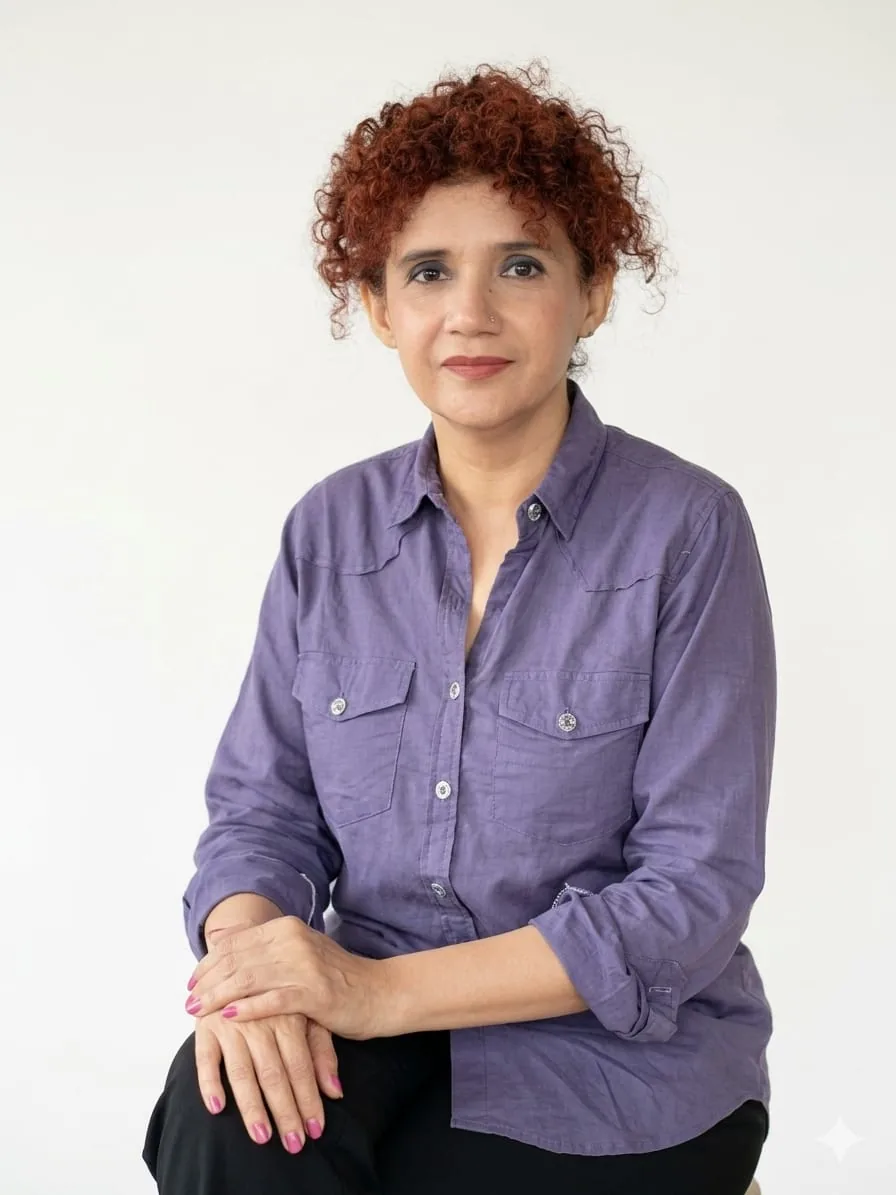
Attia Altaf — Integrative Psychotherapist
Level 3 & 4 Diploma in Integrative Psychotherapy (CPCAB, UK) · PhD in Media & Communication Sciences · 8+ years of experience · Trained in CBT, DBT, Hara Therapy & Trauma Management · Sessions in Urdu, English & Punjabi
Marriage Counseling with Islamic & Cultural Sensitivity
For many Pakistani clients, faith is central to who they are and how they approach their marriage. Attia's approach to marriage counseling is fully respectful of Islamic values — the sanctity of nikah, the importance of family, the roles and responsibilities a husband and wife hold, and the expectation that marriage is a lifelong commitment worth working for.
This is not secular Western therapy being applied awkwardly to Muslim marriages. Sessions are conducted with full cultural and religious sensitivity. Attia understands the weight of Islamic expectations on a husband and a wife, and works within that context rather than against it.
If you are looking for marriage counseling that understands concepts like sabr, haq mehr, joint family obligations, or the specific dynamics of arranged versus love marriages — this is that space.
Read the full guide: Muslim Marriage Counseling in Pakistan →
Related reading: Navigating Rishta Stress & the Arranged Marriage Process →
Does Online Marriage Counseling Actually Work?
The honest answer, from the research: yes — and it is not close to a compromise. A 2021 study published in Frontiers in Psychology found therapy delivered by videoconference produced improvements in relationship satisfaction, mental health, and the therapist–client relationship comparable to face-to-face sessions, and a meta-analysis of more than 4,300 clients found video-delivered therapy largely equivalent to in-person care across outcomes.
For Pakistani clients, online is often better than in-person: complete privacy (no clinic, no waiting room), no travel through city traffic, access to a qualified therapist regardless of which city — or country — you live in, and the comfort of speaking from your own space. All sessions run on Zoom, Monday to Saturday, 10am to 8pm PKT.
Living Abroad? Counseling Reaches You Too
A large share of marriage counseling clients live outside Pakistan — in the UK, the UAE, Saudi Arabia, the US, and Canada. Overseas marriages carry their own pressures: distance from family support, cross-border rishtas where one spouse is in Dubai and the other in Lahore, and the isolation of working through marriage problems far from home. Time zones are handled easily, and sessions run in Urdu or English with a therapist who understands the Pakistani context you come from.
Across Pakistan
Sessions via Zoom from any city — no commute, no waiting room, no one seeing you walk into a clinic.
Marriage Counseling in Lahore →
Marriage Counseling in Karachi →
Marriage Counseling in Islamabad →
Living Abroad
Urdu & English marriage counseling for the Pakistani diaspora — culturally fluent, faith-aware, and in your timezone.
Pakistani Therapist — UK →
Pakistani Therapist — Dubai & UAE →
Pakistani Therapist — Saudi Arabia →
Session Fees & Booking
Pricing is transparent with no hidden charges. Payment is made in advance via EasyPaisa or bank transfer. Sessions are conducted via Zoom at your scheduled time.
Payment via EasyPaisa · Bank Transfer | Mon–Sat, 10am–8pm PKT | No waiting list
Frequently Asked Questions
What is marriage counseling and what happens in a session?
Marriage counseling is professional therapy where a trained therapist works with you to improve communication, resolve conflict, rebuild trust, and strengthen your marriage. At Healing with Attia, sessions are individual — you attend on your own, and your spouse may occasionally join a session if it would help. Sessions are 50 minutes. The therapist acts as a neutral guide — not a judge — helping you work through what is happening in a structured, safe environment.
Can marriage counseling help if my spouse refuses to attend?
Yes. Counseling here is designed for exactly this situation — sessions are individual by default. A marriage is a system: when one person changes how they communicate, set boundaries, and respond to conflict, the dynamic between both partners shifts. Many clients start alone and see meaningful change in the relationship without their spouse ever attending.
How much does marriage counseling cost in Pakistan?
At Healing with Attia, marriage counseling sessions are PKR 5,000 per 50-minute session. Payment is via EasyPaisa or bank transfer. There are no hidden charges or registration fees.
Does online marriage counseling work as well as in-person?
Yes. A randomized clinical trial and a 2021 meta-analysis covering more than 4,300 clients found therapy delivered by video call equivalent to in-person therapy in outcomes, client satisfaction, and the quality of the therapeutic relationship. For Pakistani clients, online sessions add privacy benefits: no clinic, no waiting room, no travel. Sessions are via Zoom in Urdu and English.
What is the success rate of marriage counseling?
Research on relationship-focused therapy consistently shows the majority of clients experience meaningful improvement. Outcomes are strongest when help is sought early — research from The Gottman Institute found that couples wait an average of six years after problems begin before seeking help, which makes negative patterns harder (but not impossible) to change.
How many marriage counseling sessions will I need?
Most clients see meaningful improvement in 8–12 sessions. Addressing a specific issue such as communication may show changes in as few as 6 sessions. Situations involving long-standing conflict or trust repair may take longer. You are never locked into a fixed number — progress is reviewed throughout and you decide when to continue or conclude.
Can I do marriage counseling in Urdu?
Yes. Attia conducts marriage counseling sessions in Urdu and English. You can switch languages at any point during the session. Many clients find it easier to express deep emotions — especially around family, intimacy, or personal expectations — in Urdu.
Is this counseling appropriate for Muslim clients?
Yes. Attia's approach is fully culturally and religiously sensitive. She understands the Islamic values around marriage, family, and the importance of working through difficulty before considering separation. Sessions are conducted with complete respect for your beliefs and cultural context.
Is marriage counseling available in Lahore and Karachi?
Yes — see our dedicated pages on marriage counseling in Lahore, marriage counseling in Karachi, and marriage counseling in Islamabad.
Sources & further reading
- The Gottman Institute — couples wait an average of six years before seeking help; the "Four Horsemen" communication patterns and divorce prediction research.
- Frontiers in Psychology (2021) — therapy via videoconferencing: effects on relationship outcomes, mental health and the therapeutic alliance.
- Psychotherapy Research — in-person vs. teletherapy outcomes among married couples.
- The Express Tribune (2025) — family disputes hit record high in Pakistan.
- Frontiers in Health Services (2024) — closing the mental health gap in Pakistan.
Written by Attia Altaf, Integrative Psychotherapist (CPCAB, UK) · Last reviewed: July 2026
Your Marriage Is Worth Fighting For
Those who seek help are not the ones failing — they are the ones choosing their relationship. Take the first step today.
No waiting list · Sessions in Urdu & English · Fully confidential
Book Marriage CounselingOr browse all therapy services →
Explore More
Muslim Marriage Counseling
Culturally sensitive marriage counseling that respects Islamic values and Pakistani family structures.
Pre-Marital Counseling Before Nikah
The conversations you have before marriage shape everything that comes after. Start here.
Marriage & Relationships FAQ
Answers to the most common questions about marriage counseling in Pakistan.